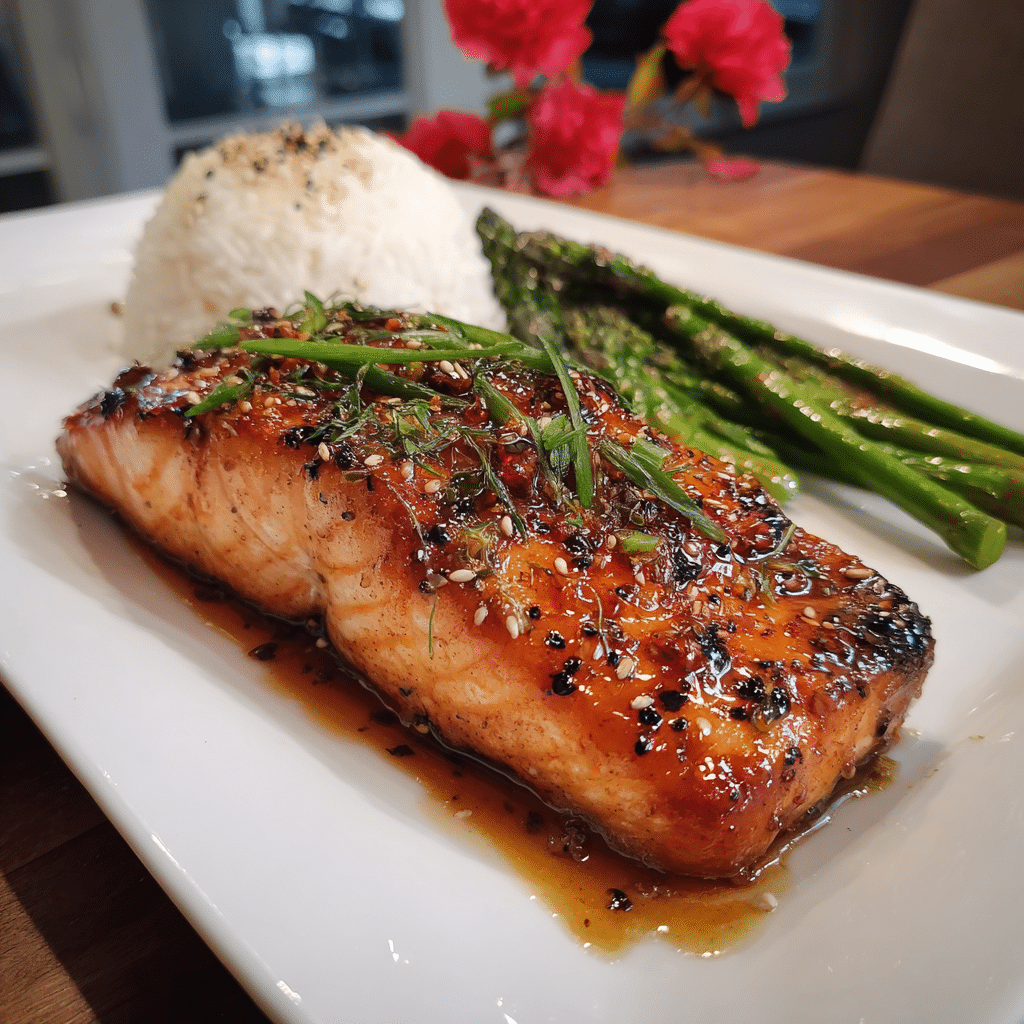
Why You’ll Love This Recipe
It is versatile, quick to prepare, perfectly balanced in flavor, adaptable for multiple cooking methods, and adds a beautiful caramelized finish to salmon without overpowering its natural richness.
Print
Salmon Glaze: A Sweet–Savory, Versatile Finish for Perfectly Cooked Salmon
- Total Time: 5 mins
- Yield: 1/2 cup glaze (for 4 salmon fillets)
- Diet: Gluten Free
Description
A versatile, sweet–savory salmon glaze that caramelizes beautifully in the oven or pan, adding rich flavor with minimal effort.
Ingredients
- 1/4 cup soy sauce
- 3 tbsp honey or maple syrup
- 2 tbsp brown sugar
- 2 tbsp lemon juice (or rice vinegar)
- 2 cloves garlic, minced
- 1 tsp grated fresh ginger (optional)
- 1 tbsp Dijon mustard (optional for tang)
- 1 tbsp olive oil
- 1/4 tsp red pepper flakes (optional)
Instructions
- Whisk together soy sauce, honey, brown sugar, lemon juice, garlic, ginger, mustard, olive oil, and red pepper flakes until smooth.
- Brush glaze generously over salmon fillets before baking, grilling, or pan-searing.
- Reserve a few tablespoons to brush on during the last minutes of cooking for extra shine.
- Optional: Simmer leftover glaze in a small pot for 2–3 minutes to thicken into a richer sauce.
Notes
- Use maple syrup instead of honey for a deeper flavor.
- Add orange zest or juice for a citrus twist.
- For a spicy version, increase red pepper flakes or add a bit of sriracha.
- Also works well as a glaze for shrimp or chicken.
- Prep Time: 5 mins
- Cook Time: 0 mins
- Category: Sauce
- Method: No-Cook
- Cuisine: American
Ingredients
(Tip: You can find the complete list of ingredients and their measurements in the recipe card below.)
Honey
Provides sweetness and helps the glaze caramelize, giving salmon a glossy finish.
Soy sauce
Adds savory depth and saltiness, balancing the sweetness of the honey.
Dijon mustard
Offers gentle heat and acidity, helping the glaze cling to the salmon.
Garlic
Infuses the glaze with aromatic warmth and savory richness.
Lemon juice
Brightens the glaze, cutting through the richness of the salmon and adding freshness.
Olive oil
Adds smooth body to the glaze and helps it spread evenly on the fish.
Black pepper
Enhances overall flavor and adds a touch of warmth.
Directions
Begin by whisking together the honey, soy sauce, Dijon mustard, minced garlic, lemon juice, olive oil, and black pepper in a small bowl until smooth. The mixture should be thick enough to coat a spoon but still pourable. Taste and adjust sweetness or acidity as desired.
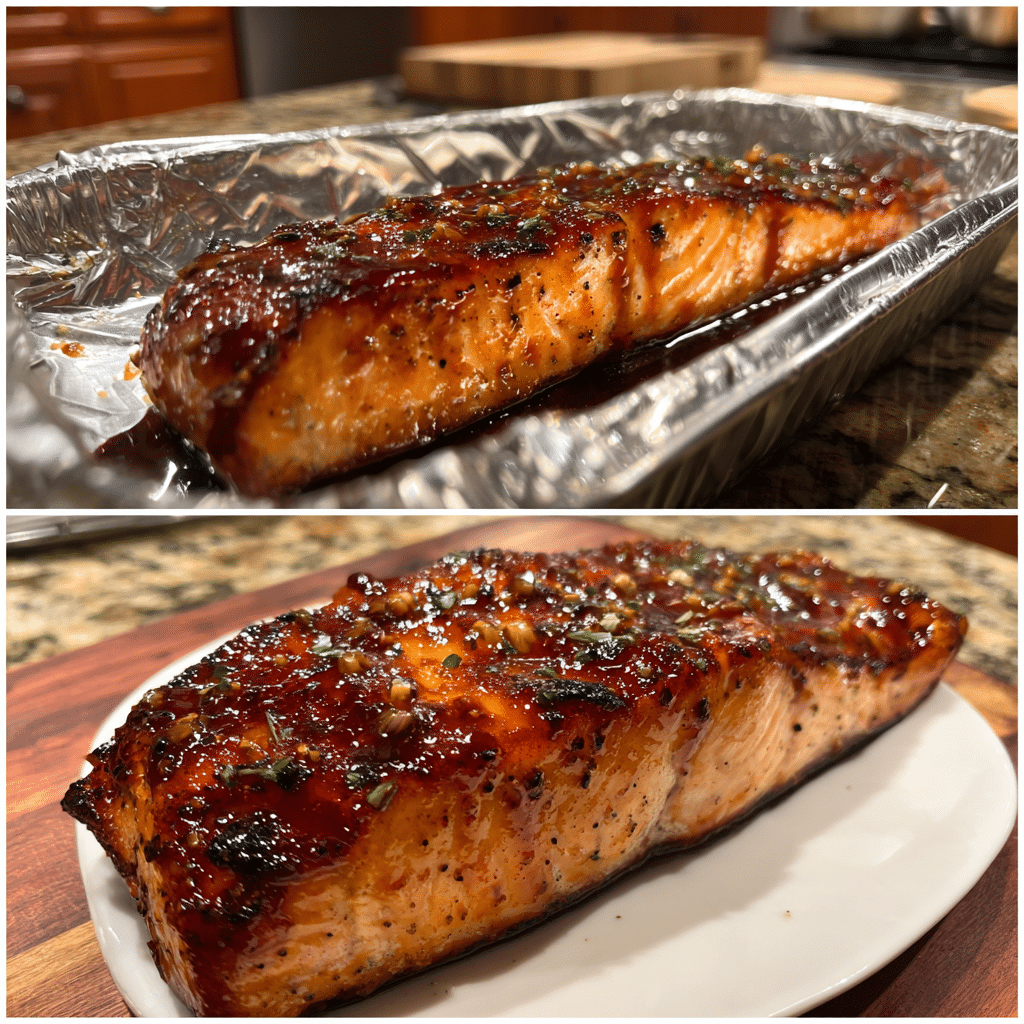
Pat the salmon fillets dry and place them on a lined baking sheet or lightly oiled skillet. Brush a generous amount of the glaze over each piece, ensuring all sides are coated. Allow the salmon to marinate briefly while you preheat the oven or skillet. If baking, cook until the salmon flakes easily with a fork and the glaze becomes slightly caramelized. If pan-searing, cook skin-side down first to crisp the skin, then flip and brush with more glaze as it finishes cooking. For grilling, brush additional glaze during the last minutes to avoid burning. Serve with extra glaze spooned over the top.
Essential Equipment
Must-Have Tools to Get Rolling
Here’s what you’ll want to have on hand:
Silicone Spatula – Durable, heat-resistant silicone spatula perfect for mixing, scraping, and spreading. Gentle on non-stick cookware and easy to clean.
Large pot – You’ll need this to boil the whole cabbage head and soften the leaves.
large bowl –Spacious, durable large bowl ideal for mixing, serving, or food preparation. Made from sturdy material and easy to clean.
Sharp knife – For coring the cabbage and slicing out the thick stem in each leaf. A paring knife works best.
Mixing bowl – A big bowl makes it easier to combine your meat and rice filling evenly.
Cutting board – For prepping cabbage leaves and rolling them like a pro.
9×13-inch baking dish – Ideal size to fit your rolled cabbage leaves snugly and prevent them from unraveling.
knife – A sharp, durable kitchen knife perfect for slicing, chopping, and dicing with ease.
Servings and timing
Serves 4
Preparation time: 5 minutes
Cook time (depending on method): 10–15 minutes
Total time: about 20 minutes
Storage/reheating
Store leftover glaze in an airtight container in the refrigerator for up to five days. If using as part of meal prep with cooked salmon, reheat gently in a low oven or covered skillet to avoid drying out the fish. The glaze can be made ahead and kept chilled; whisk before using. Freezing is not recommended as the lemon and garlic may lose potency.
Variations and Customizations
Maple–Soy Glaze
Swap honey for maple syrup to create a deeper, woodsy sweetness.
Ginger–Garlic Glaze
Add fresh grated ginger for a spicy, aromatic kick.
Spicy Chili Glaze
Stir in sriracha or red pepper flakes for heat.
Orange–Honey Glaze
Replace lemon juice with fresh orange juice for a sweet citrus finish.
Brown Sugar Dijon Glaze
Use brown sugar instead of honey for a caramel-like richness.
Teriyaki-Style Glaze
Add mirin and a splash of rice vinegar for a more traditional Japanese profile.
Pineapple Glaze
Replace some lemon juice with pineapple juice for tropical sweetness.
Herb-Infused Glaze
Stir in fresh thyme or rosemary for an herby aromatic accent.
Smoky Glaze
Add smoked paprika for depth and subtle smokiness.
Balsamic Sweet–Savory Glaze
Use balsamic vinegar to create a tangy, glossy glaze.
FAQs
Can I use this glaze for other fish?
Yes, it works wonderfully with cod, trout, halibut, and even chicken.
Does the glaze burn easily?
Sugar-based glazes can burn if cooked over very high heat; apply extra glaze near the end.
Can I marinate the salmon?
Yes, marinate for 15–30 minutes for deeper flavor.
Is soy sauce necessary?
You may substitute coconut aminos for a lower-sodium or gluten-free option.
Can I use bottled lemon juice?
Fresh lemon juice gives the best brightness, but bottled works in a pinch.
Should the salmon skin be left on?
Yes, it helps keep the fish moist during cooking.
Can I grill salmon with this glaze?
Absolutely—just glaze in the final minutes to avoid flare-ups.
Is this glaze sweet?
It is balanced; reduce honey if you prefer a less sweet version.
Can I double the recipe?
Yes, it scales very easily for larger portions or meal prep.
Can this be used as a dipping sauce?
Yes, reserve a portion before brushing raw salmon to use as a finishing drizzle.
Conclusion
This Salmon Glaze brings brightness, balance, and glossy caramelization to any salmon dish with minimal effort. It enhances the natural flavor of the fish while offering a sweet–savory finish that suits baking, grilling, and pan-searing alike. Whether you prepare it for a weeknight dinner or a special occasion, this versatile glaze adds elegance and depth to your meal every time.
Looking for more tasty recipes? Visit our website for full details and follow us on Pinterest for daily food ideas to save and share